Why Your Feet Hurt So Much More on Hour Ten Than Hour Two of a 12-Hour Shift
Quick Answer: Foot pain on long shifts accelerates rather than building linearly because the foot’s supportive soft tissue — the plantar fascia and intrinsic muscles — fatigues progressively, shifting more load onto pain-sensitive structures as the shift goes on, which is why hour ten hurts disproportionately more than the first eight hours combined would suggest.
The first few hours of a 12-hour shift are manageable. By hour ten, every step feels like a different kind of pain than it did at hour two. That jump isn’t random — it’s your foot’s support system running out of reserve capacity.

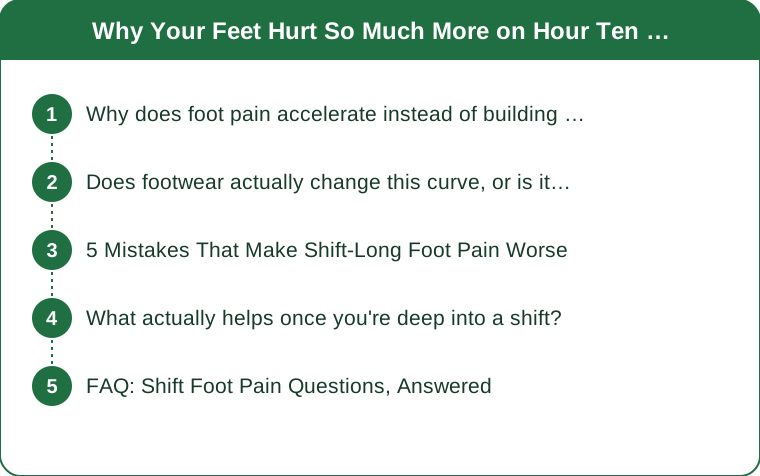
Why does foot pain accelerate instead of building steadily?
The plantar fascia and small intrinsic foot muscles act as active shock absorbers early in a shift, but these tissues fatigue with sustained use, similar to any muscle under continuous load. As they tire, more mechanical stress transfers to pain-sensitive structures — joint capsules, nerves, and the fascia’s attachment points — which is why the pain curve isn’t linear; it stays relatively mild for hours, then climbs sharply once the supportive tissues’ reserve capacity is used up.
Does footwear actually change this curve, or is it inevitable?
Footwear makes a measurable difference specifically in delaying when that fatigue threshold hits. Supportive, cushioned shoes with adequate arch support reduce the load intrinsic foot muscles have to actively manage, extending the window before the sharp pain increase — but even excellent footwear doesn’t eliminate the underlying fatigue curve entirely on a 12-hour shift.

5 Mistakes That Make Shift-Long Foot Pain Worse
1. Standing in the same position for extended stretches without any weight shifting — static loading fatigues the same tissues faster than varied position. 2. Wearing shoes broken in for walking, not standing — standing and walking distribute pressure differently across the foot. 3. Skipping compression socks — they support circulation which affects how quickly fatigue byproducts clear from tissue. 4. Not changing shoes or inserts partway through a shift — some staff find swapping to a fresh cushioned insert at the halfway point genuinely helps. 5. Ignoring early mild discomfort — addressing tightness or mild pain early (a quick calf stretch, brief sit) can meaningfully delay the sharp escalation later.
What actually helps once you’re deep into a shift?
Brief seated breaks with feet elevated, even just 2-3 minutes, allow some fluid drainage and short-term recovery of fatigued tissue. Calf and plantar fascia stretches during breaks also help, since tightness in the calf directly increases strain on the plantar fascia. Compression socks throughout the shift support circulation that helps manage the fatigue-and-swelling cycle contributing to the pain curve.
FAQ: Shift Foot Pain Questions, Answered
Does shoe replacement frequency actually matter for foot pain?
Yes — shoes lose cushioning and support over months of heavy use well before they look visibly worn out; replacing supportive shoes every 6-12 months of regular shift use is a reasonable guideline.
Are custom orthotics worth it for shift workers?
For persistent pain not resolved by footwear and stretching alone, custom or over-the-counter orthotic inserts are a reasonable next step many find helpful.
When does foot pain on shifts warrant seeing a professional?
Persistent pain that doesn’t improve with rest, or sharp localized pain (as opposed to general fatigue soreness), is worth having evaluated. This is general information, not medical advice.
TL;DR:
- Foot pain accelerates rather than building steadily because supportive tissue fatigues progressively
- Good footwear delays the fatigue threshold but doesn’t eliminate the curve on a 12-hour shift
- Brief seated breaks with feet elevated allow real short-term tissue recovery
- Address mild discomfort early — it delays the sharp pain escalation later in the shift
That jump in pain around hour ten isn’t your imagination — it’s your foot’s support system running past its reserve capacity.
Keep Reading
This article is for general informational purposes only and is not medical advice. Always consult a qualified health professional for guidance specific to you.