Why the Third Shift in a Row Tends to Bring On a Headache Even When the First Two Didn't
Quick Answer: A headache that shows up specifically on the third consecutive shift is usually a sign of cumulative dehydration, sleep debt, and eye strain stacking up rather than any single day’s factor — each individual shift may be manageable, but the combined deficit tends to surface around day three.
Day one felt fine. Day two was tiring but okay. Then day three brings a headache that seems to come from nowhere — except it’s rarely actually sudden.

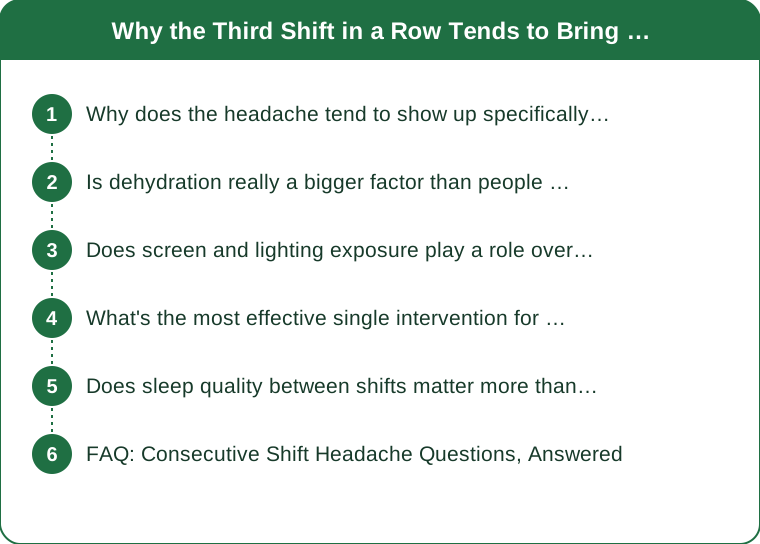
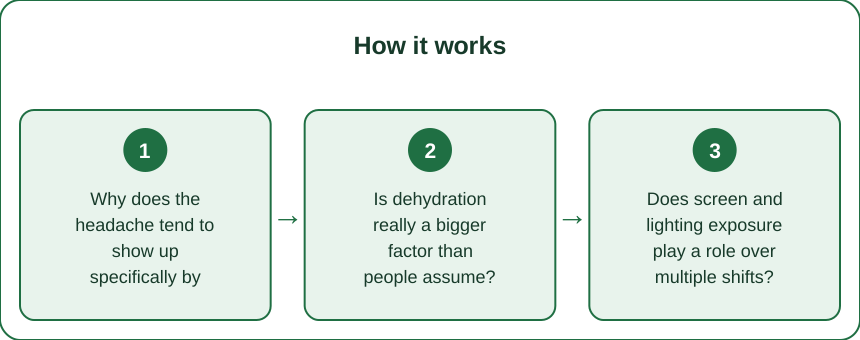
Why does the headache tend to show up specifically by the third shift?
Cumulative sleep debt and dehydration build gradually across consecutive shifts, and most people’s bodies can compensate for one or two days of suboptimal rest and fluid intake before the deficit becomes large enough to trigger a tension or dehydration headache, which is why day three is a common tipping point.
Is dehydration really a bigger factor than people assume?
Yes — busy shifts with limited bathroom or water breaks compound over consecutive days more than people realize, since even mild daily under-hydration adds up, and mild dehydration is one of the most common and underrecognized headache triggers in shift work.
Does screen and lighting exposure play a role over multiple shifts?
Yes, meaningfully — cumulative eye strain from monitors, harsh overhead lighting, and screen glare across several long shifts in a row can contribute to tension headaches that build gradually rather than appearing after just one shift’s exposure.

What’s the most effective single intervention for preventing the third-shift headache?
Proactive hydration scheduled at specific times, rather than only drinking when thirsty, tends to be the single most effective fix, since thirst signals often lag behind actual fluid needs during a demanding, fast-paced shift.
Does sleep quality between shifts matter more than sleep quantity here?
Both matter, but consistent, dark, uninterrupted sleep between consecutive shifts helps prevent the compounding sleep debt that contributes to the day-three headache pattern more effectively than simply spending more hours in bed with lower-quality rest.
FAQ: Consecutive Shift Headache Questions, Answered
Should caffeine intake be adjusted across a multi-shift stretch?
Consistent, moderate caffeine timing (not skipping it some days and overloading others) helps avoid the withdrawal-related headaches that inconsistent caffeine patterns can trigger.
Is a third-shift headache a sign something more serious is going on?
Usually not, if it resolves with hydration, rest, and the stretch ending — but headaches that are severe, sudden, or don’t improve are worth mentioning to a doctor. This is general information, not medical advice.
Does magnesium or electrolyte intake help prevent this pattern?
Some people find electrolyte support genuinely helpful during demanding multi-shift stretches, particularly if plain water intake alone isn’t keeping up with fluid loss from a physically active shift.
TL;DR:
- A day-three headache usually reflects cumulative dehydration and sleep debt, not a sudden new problem
- Mild daily under-hydration compounds meaningfully across consecutive demanding shifts
- Cumulative eye strain from screens and lighting adds to the tension headache pattern
- Scheduled proactive hydration is the single most effective preventive habit
On your next multi-shift stretch, set a specific hydration schedule rather than relying on thirst — it’s the one change most likely to keep day three headache-free.
Keep Reading
This article is for general informational purposes only and is not medical advice. Always consult a qualified health professional for guidance specific to you.