Why Feet Hurt Noticeably More on Day Three of a Shift Stretch Than on Day One
Quick Answer: Foot pain that builds sharply by the third consecutive 12-hour shift reflects cumulative, unresolved inflammation and fluid retention in the feet and lower legs that doesn’t fully clear between shifts on a tight turnaround schedule — plantar fascia and soft tissue in the feet need more than a single overnight recovery window to fully reset after 12 hours of standing and walking, and compression wear plus deliberate elevation between shifts are the two most effective ways to interrupt this cumulative buildup.
Day-one foot soreness and day-three foot pain aren’t really the same phenomenon at different intensities — day three reflects a genuine cumulative load that hasn’t had enough time to clear.

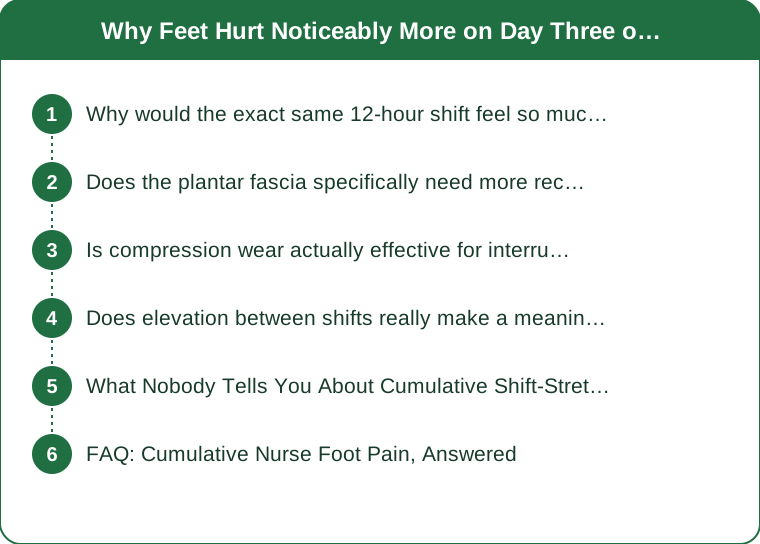
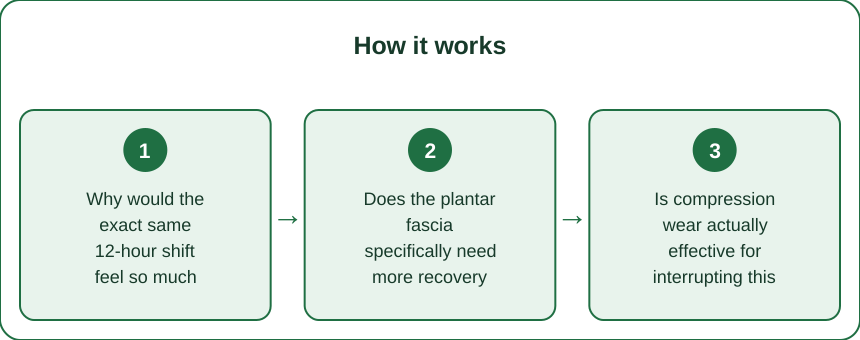
Why would the exact same 12-hour shift feel so much worse on foot pain by the third day in a row?
Inflammation and fluid retention in the feet and lower legs from standing and walking don’t fully resolve overnight, especially on a tight turnaround between consecutive shifts, which means each subsequent shift starts from a baseline of residual, unresolved swelling and tissue fatigue rather than a fully reset state. By day three, this cumulative, unresolved load compounds meaningfully beyond what day one’s fresh tissue experienced.
Does the plantar fascia specifically need more recovery time than other tissues involved?
Yes — the plantar fascia, the connective tissue band along the bottom of the foot, is under sustained mechanical load throughout a 12-hour standing shift, and this type of connective tissue generally has slower recovery kinetics than muscle tissue, meaning a single overnight rest period is often genuinely insufficient for full recovery before the next shift begins. This is part of why plantar-fascia-related foot pain specifically tends to show the most pronounced day-over-day worsening across a shift stretch.
Is compression wear actually effective for interrupting this cumulative buildup, or mostly comfort-focused?
It’s genuinely functionally effective, not just comfort-focused — graduated compression improves venous return, helping fluid move back out of the lower legs and feet more efficiently both during a shift and during the recovery window afterward, which directly addresses the fluid retention component of the cumulative buildup. This effect compounds across a multi-shift stretch, making compression wear more valuable on day two and three than it might seem based on day-one comfort alone.

Does elevation between shifts really make a meaningful difference, or is it more of a minor comfort habit?
Elevating the feet above heart level for even 15-20 minutes uses gravity to assist fluid drainage from the lower legs and feet, which measurably speeds up the reduction of the swelling that compression wear alone doesn’t fully resolve. Combined with compression, deliberate elevation between shifts is one of the more effective, low-effort interventions for reducing the day-three pain spike specifically.
What Nobody Tells You About Cumulative Shift-Stretch Foot Pain
Footwear that felt perfectly adequate on day one can start to feel meaningfully tighter by day three, purely from the accumulated foot swelling itself, not from the shoe changing — this is a frequently overlooked factor, and switching to slightly more adjustable or accommodating footwear specifically for the later days of a multi-shift stretch, rather than wearing identical footwear throughout, can reduce discomfort that gets misattributed purely to fatigue.
FAQ: Cumulative Nurse Foot Pain, Answered
Is there a specific compression sock grade recommended for multi-shift stretches specifically?
Moderate graduated compression (typically in the 15-20 mmHg range) is commonly recommended for all-day standing work, with some nurses opting for a slightly higher grade specifically during multi-shift stretches — checking with a healthcare provider is worthwhile for anyone with an existing circulation concern.
Does hydration status affect this cumulative swelling pattern?
Yes — adequate hydration actually supports better fluid balance and circulation, somewhat counterintuitively, since chronic mild dehydration can worsen fluid retention patterns in the extremities rather than reducing them.
When does foot pain across a shift stretch cross from normal cumulative fatigue into something worth medical evaluation?
Sharp, localized pain, pain that doesn’t improve at all with a full day off, or any visible significant swelling or discoloration warrants medical evaluation rather than being managed as routine cumulative fatigue. This is general information, not medical advice.
TL;DR:
- Foot inflammation and fluid retention from standing shifts often don’t fully clear overnight on tight turnarounds
- Plantar fascia tissue specifically has slower recovery kinetics, contributing to the day-three pain spike
- Compression wear improves venous return, directly addressing the fluid retention component of the buildup
- Elevating feet above heart level between shifts meaningfully speeds up swelling reduction alongside compression
The sharp jump in foot pain by day three of a shift stretch reflects real, measurable cumulative physiological load — compression and deliberate elevation between shifts are the two most effective ways to interrupt that buildup. This is general information, not medical advice.
Keep Reading
This article is for general informational purposes only and is not medical advice. Always consult a qualified health professional for guidance specific to you.