Compassion Fatigue in Nursing: The Warning Signs Before Burnout Hits
Quick Answer: Compassion fatigue in nursing is the gradual emotional and physical exhaustion that comes from sustained exposure to patients’ suffering, and it typically shows up before full burnout as reduced empathy, irritability, and a sense of numbness toward situations that used to feel emotionally significant. Catching these early signs matters because compassion fatigue is more responsive to intervention than full burnout.
Compassion fatigue rarely arrives all at once - it builds quietly over weeks or months, often mistaken for just being tired or having a bad stretch of shifts. Here are the specific signs worth paying attention to before it deepens into full burnout.

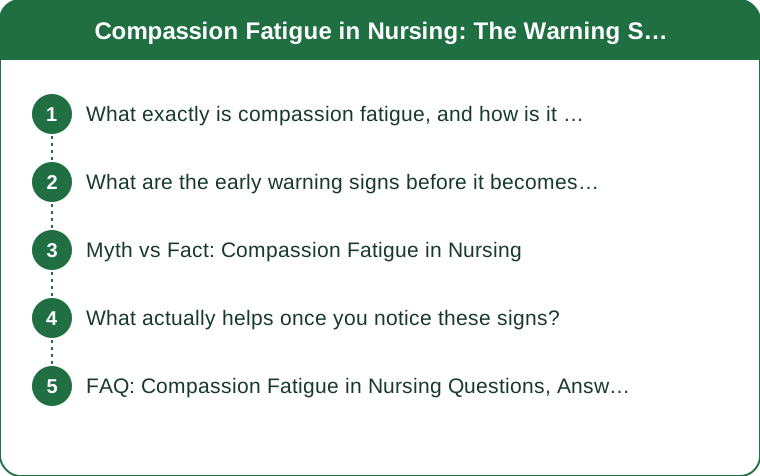
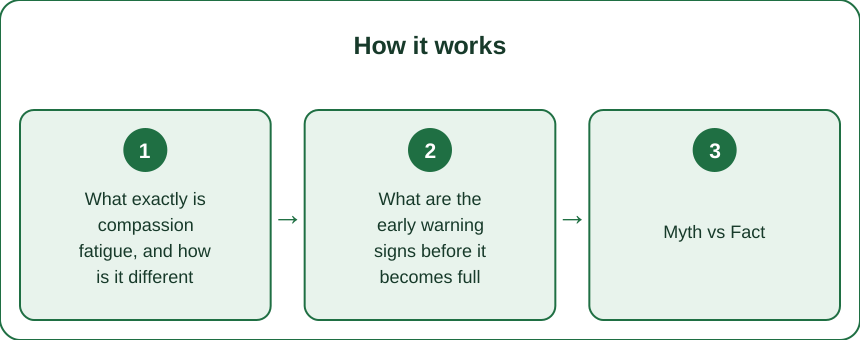
What exactly is compassion fatigue, and how is it different from burnout?
Compassion fatigue is specifically tied to repeated emotional exposure to others’ suffering - it’s sometimes called secondary traumatic stress, and it’s distinct from general burnout, which can come from workload, scheduling, or systemic issues without the same emotional-exposure component. In practice, the two often overlap and compound each other, but compassion fatigue has a more specific trigger: caring for people in pain, over and over, without enough space to process it.
Nurses in high-acuity or high-emotional-intensity settings - oncology, ICU, emergency, hospice - tend to report compassion fatigue more frequently, though it can develop in any care setting given enough sustained exposure without recovery time.
The distinction matters practically because the interventions differ somewhat: burnout often improves with schedule changes, workload adjustments, or systemic fixes, while compassion fatigue specifically needs emotional processing space - the two frequently need to be addressed together rather than assuming one fix alone covers both underlying issues.
What are the early warning signs before it becomes full burnout?
Reduced empathy toward patients is often the first sign - finding yourself going through the emotional motions of care without actually feeling connected to it, sometimes accompanied by guilt about that numbness. Increased irritability, especially toward coworkers or family, over things that wouldn’t normally bother you, is another early marker.
Other early signs include difficulty leaving work emotions at work, intrusive thoughts about difficult cases even during off hours, and a growing sense of dread before shifts that used to feel neutral or even positive. Physical signs often accompany these - disrupted sleep, appetite changes, and a general sense of being emotionally ‘flat’ outside of work too.

Myth vs Fact: Compassion Fatigue in Nursing
Myth: Compassion fatigue means you’re not cut out for nursing. Fact: It’s an extremely common occupational response to the actual nature of the work, not a personal or professional failing - studies consistently show high rates among experienced, skilled nurses specifically because of their sustained exposure.
Myth: Taking time off is the only real fix. Fact: Time off helps, but sustainable change usually requires addressing ongoing exposure patterns and building in regular emotional processing - a break without changing anything else often means the same fatigue returns within weeks of coming back.
Myth: If you still care about your patients, you don’t have compassion fatigue. Fact: Compassion fatigue exists on a spectrum - many nurses still deeply care while also experiencing real emotional depletion; the two aren’t mutually exclusive.
What actually helps once you notice these signs?
Regular debriefing, whether formal (with a counselor or peer support program) or informal (a trusted colleague after a hard shift), gives the emotional processing that sustained exposure otherwise skips. Many hospitals now offer structured debrief sessions after particularly difficult cases - using them, rather than pushing through, is a legitimate and often underused resource.
Building in genuine recovery time between emotionally intense shifts, rather than back-to-back scheduling whenever possible, and maintaining connections and activities entirely outside of healthcare both help create the separation that sustained caregiving work otherwise erodes over time.
Some units have started rotating especially emotionally intense assignments among staff rather than routinely placing the same nurses on the hardest cases, which spreads the exposure more evenly and gives individuals genuine recovery windows between the most demanding stretches, rather than one nurse repeatedly absorbing the hardest emotional load over and over again.
FAQ: Compassion Fatigue in Nursing Questions, Answered
How is compassion fatigue diagnosed?
There’s no single clinical diagnosis - it’s typically identified through validated screening tools (like the Professional Quality of Life scale) used in occupational health settings, or recognized through the pattern of symptoms described above.
Can compassion fatigue happen to new nurses, or only experienced ones?
It can happen at any career stage, though the specific risk factors differ - new nurses may face it from the shock of high-intensity exposure without established coping strategies yet, while experienced nurses may face it from cumulative years of exposure.
When should I seek professional help rather than trying to manage it myself?
If symptoms are affecting your ability to function at work or in personal relationships, or if you’re experiencing persistent sadness, anxiety, or intrusive thoughts, a mental health professional is the appropriate next step. This is general information, not medical advice.
TL;DR:
- Compassion fatigue comes specifically from sustained exposure to others’ suffering, distinct from general burnout
- Reduced empathy and rising irritability are common early warning signs
- It’s a common occupational response, not a personal failing
- Regular debriefing and genuine recovery time between intense shifts are the most effective interventions
This is general information, not medical advice - persistent symptoms affecting work or relationships deserve a professional evaluation.
Keep Reading
This article is for general informational purposes only and is not medical advice. Always consult a qualified health professional for guidance specific to you.