Quick Self-Care Strategies for Nurses (Care for Yourself Too)
Nurses spend their days caring for everyone else — often at the expense of their own wellbeing. But quick, realistic self-care strategies can fit even the most demanding shifts and help prevent burnout. Here is why nurses neglect self-care, the quick strategies that fit, and how to protect yourself.

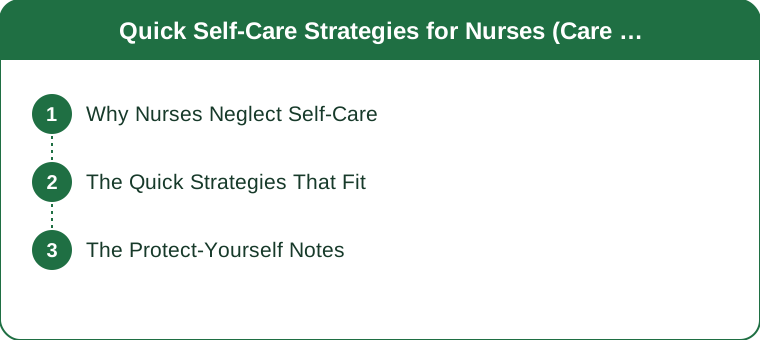
Why Nurses Neglect Self-Care
The caregiver’s dilemma: the the-caring-for-others-first (the nurses putting patients and others before themselves from the wellness-survival logic — the others-first), the the-demanding-shifts (the long, demanding shifts leaving little time or energy from the wellness-survival logic — the the-demanding-shifts), the the-physical-and-emotional-toll (the the physical and emotional toll of nursing from the compassion-fatigue logic — the the-toll), the the-compassion-fatigue (the compassion fatigue and burnout being real risks from the compassion-fatigue logic — the compassion-fatigue), the the-no-time-mindset (the feeling there is no time for self-care from the wellness-survival logic — the the-no-time-trap), and the reframe (the nurse self-care as neglected but essential — quick, realistic strategies fitting demanding shifts and helping prevent the very real burnout and compassion fatigue).

The Quick Strategies That Fit
Self-care on shift: the the-micro-breaks (the quick micro-breaks during shifts to reset from the wellness-survival logic — the micro-breaks), the the-hydration-and-nutrition (the staying hydrated and eating well on shift from the nutrition-hydration logic — the fuel-and-hydrate), the the-foot-and-leg-care (the caring for feet and legs from being on them all shift from the foot-leg-care logic — the the-foot-care), the the-body-mechanics (the good body mechanics to protect your body from the body-mechanics logic — the protect-your-body), the the-quick-stress-resets (the quick stress-relief and breathing on shift from the compassion-fatigue logic — the stress-resets), the the-movement-and-stretching (the quick stretches and movement during shifts from the body-mechanics logic — the move-and-stretch), the the-emotional-decompression (the decompressing emotionally after tough shifts from the compassion-fatigue logic — the emotional-decompression), and the the-rest-and-recovery-between-shifts (the prioritizing rest and recovery between shifts from the wellness-survival logic — the rest-between-shifts).
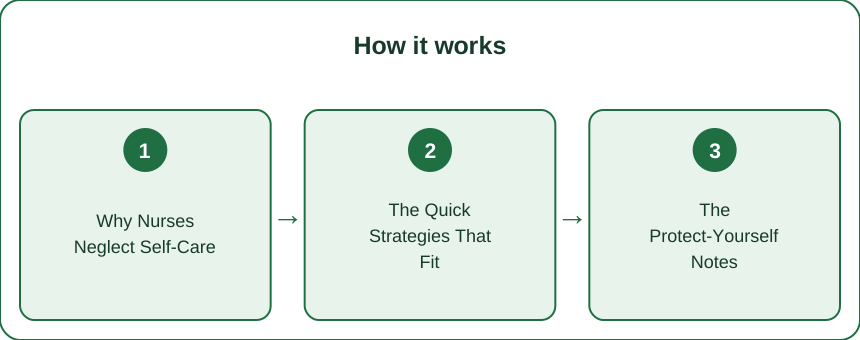
The Protect-Yourself Notes
Sustaining yourself: the the-you-cannot-pour-from-empty (the caring for yourself to be able to care for others from the wellness-survival logic — the fill-your-own-cup), the the-protect-against-burnout (the protecting against burnout and compassion fatigue from the compassion-fatigue logic — the prevent-burnout), the the-set-boundaries (the boundaries protecting your time and energy from the wellness-survival logic — the boundaries), the the-protect-your-body (the body mechanics and foot care to prevent injury and pain from the body-mechanics and foot-leg-care logic — the protect-the-body), the the-emotional-support-and-decompression (the emotional support and decompression for the job’s toll from the compassion-fatigue logic — the emotional-support), the the-prioritize-sleep (the protecting sleep, especially with shift work from the wellness-survival logic — the the-sleep), the the-small-consistent-self-care (the small, consistent self-care over none from the wellness-survival logic — the little-and-often), and the frame (the nurse self-care as quick micro-breaks, hydration, body and foot care, and emotional decompression that fit demanding shifts — caring for yourself so you can keep caring for others. Take micro-breaks, fuel and hydrate, protect your body and feet, decompress emotionally, and prioritize rest between shifts).
Nurses spend their days caring for everyone else — often at the expense of their own wellbeing — but quick, realistic self-care strategies can fit even the most demanding shifts and help prevent burnout. Nurses neglect self-care because they put others first, shifts are demanding, the physical and emotional toll is high, compassion fatigue is a real risk, and there feels like no time. The quick strategies that fit: micro-breaks, hydration and nutrition on shift, foot and leg care, good body mechanics, quick stress resets and breathing, movement and stretching, emotional decompression, and rest between shifts. Protect yourself by remembering you cannot pour from empty, guarding against burnout, setting boundaries, protecting your body and feet, getting emotional support, prioritizing sleep, and doing small consistent self-care. Caring for yourself so you can keep caring for others.
Keep Reading
This article is for general informational purposes only and is not medical advice. Always consult a qualified health professional for guidance specific to you.