Nutrition and Hydration for Nurses: How to Fuel a 12-Hour Shift (When There's No Time to Eat)
Quick Answer: Fueling a 12-hour shift takes planning, not time. Eat a real meal with protein and slow carbs 60–90 minutes before you clock in, pack 3–4 one-handed snacks you can eat in 90 seconds, and carry a 32oz bottle you aim to finish twice across the shift. Cap coffee at two cups before hour six. The goal isn’t a perfect diet — it’s avoiding the 3pm crash that a vending machine caused.
Hour seven. You’ve had a coffee, half a granola bar someone left in the break room, and roughly four sips of water since 7am.
You know exactly what you’d tell a patient doing this. The problem was never knowledge — it’s that a 12-hour shift is structurally hostile to eating, and willpower doesn’t fix a structural problem. Planning does.
Why Is It So Hard for Nurses to Eat on Shift?
It isn’t a discipline failure. Three things stack:
Breaks are unpredictable and interruptible. You can’t plan a meal around a break that may arrive at 11am or 3pm or never. Anything requiring a fork, a microwave, and fifteen uninterrupted minutes will get skipped on the days you most need it.
The default options are the worst ones. When you finally have four minutes at hour eight, what’s available is a vending machine. Sugar buys you 40 minutes and then charges interest.
Caffeine masks the signal. Coffee suppresses appetite and papers over fatigue, so you don’t notice you’re underfueled until you’re shaky, irritable, and making the kind of small errors that matter enormously in your job.
The consequences aren’t abstract. Underfueling on a 12-hour shift degrades concentration, decision-making, and mood — and it drives the after-shift binge that wrecks the next day too.

The Pre-Shift Meal Does the Heavy Lifting
This is the meal you actually control, so make it count.
Eat 60–90 minutes before clocking in, and build it from three things: protein (eggs, Greek yogurt, chicken, tofu), slow carbs (oats, whole grain toast, sweet potato), and some fat (avocado, nut butter, olive oil). That combination digests slowly and holds blood sugar steady for hours, which is exactly what you need when the next real eating window is uncertain.
Aim for 25–35g of protein here. It’s the difference between being genuinely hungry at hour four and being fine until hour six.
For night shift, the same meal works — eat it before you go in, and treat your “lunch” around 1–3am as the smaller anchor meal rather than the main one.
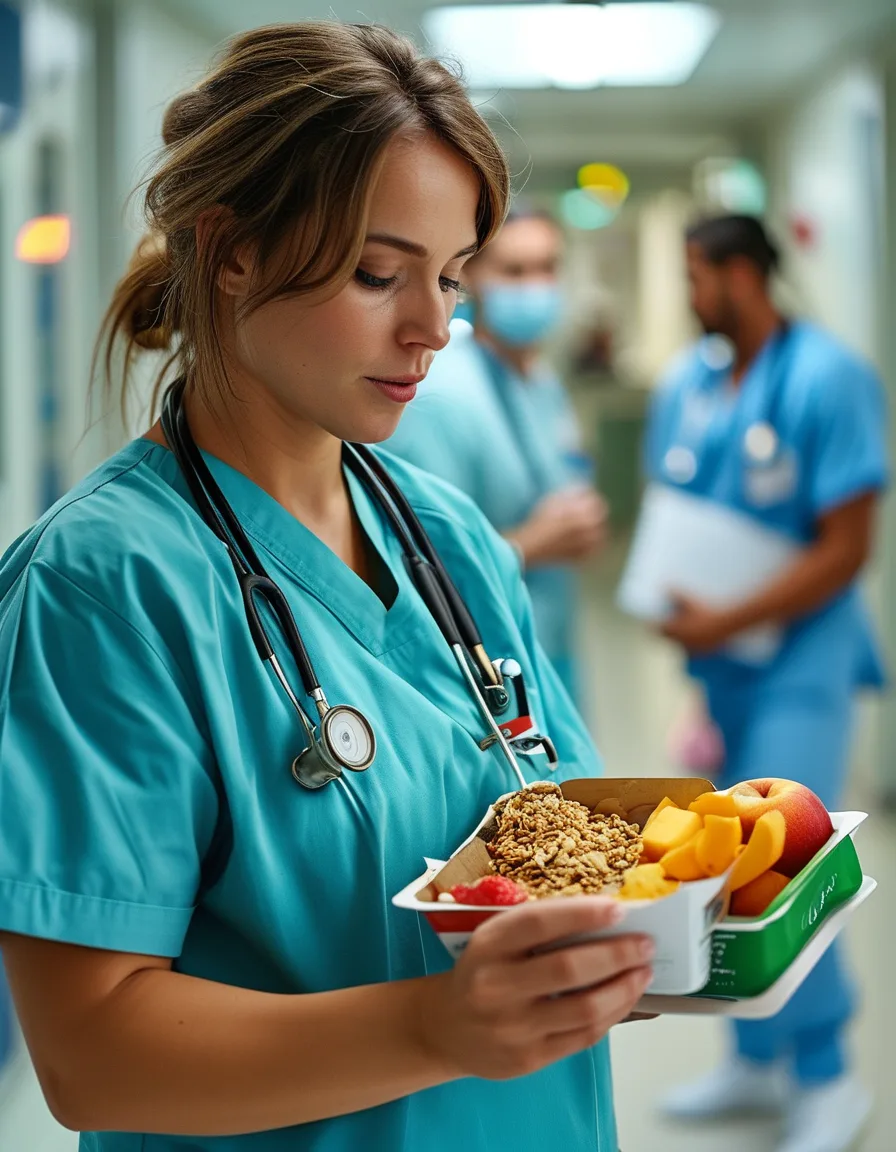
Pack Snacks You Can Eat in 90 Seconds With One Hand
This is the entire trick. If a snack requires plating, heating, or two hands, it will not get eaten.
Pocket tier (survives being in scrubs for six hours):
- Nut butter packets
- Beef or turkey jerky sticks
- A small bag of almonds or walnuts
- Protein bars — check that they have at least 10g protein and under 15g sugar, or you’ve packed a candy bar
Bag tier (in your locker or the fridge):
- Greek yogurt cups
- Cheese sticks and a piece of fruit
- Hard-boiled eggs, cooked in a batch Sunday
- Pre-cut veggies with hummus
- A protein shake — genuinely useful when you have 60 seconds and no appetite
Pack 3–4 of these per shift. Eat one roughly every 3 hours whether or not you feel hungry, because hunger is an unreliable signal when you’re this busy.
The batch-prep version: one hour on your day off — hard-boil a dozen eggs, portion nuts into bags, cook a grain and a protein for pre-shift meals. That hour covers a whole week.
5 Mistakes Everyone Makes Fueling a Shift
1. Running on coffee until hour eight. Caffeine isn’t fuel — it’s a loan against energy you haven’t generated. Cap it at two cups and stop by hour six, especially on nights, or you’ll wreck the sleep that has to reset everything.
2. Grabbing whatever’s in the break room. Donuts and candy spike blood sugar and drop it 40 minutes later, right when you need to be sharp. If it’s there, pair it with protein rather than eating it alone.
3. Waiting until you’re hungry. By then you’re already behind, and you’ll eat fast and badly. Eat on the clock, not on the signal.
4. Not drinking because bathroom breaks are hard. Extremely common and completely counterproductive. Mild dehydration produces headaches, fatigue, and impaired concentration — the exact symptoms you’re blaming on the shift.
5. Bingeing after the shift. The 8pm meal that repairs a day of underfueling is a symptom, not a solution. Fixing the pre-shift meal and the snacks fixes this automatically.
How Much Water Do You Actually Need?
Aim for two 32oz bottles across a 12-hour shift — one filled at the start of the shift, one refilled at the midpoint. That’s roughly 2 liters, which suits most people doing 12 hours of physical work on their feet.
Practical tactics that survive a real shift:
- Keep the bottle where you pass it, not where you sit. Visual cue beats intention.
- Attach drinking to an existing routine — a few big sips every time you chart, or after every room. Habit-stacking works better than reminders.
- Set a phone alarm at hour 3, 6, and 9 if you’re a chronic under-drinker. Slightly silly, very effective.
- Watch your urine color — pale yellow is the target, and it’s the only feedback that’s actually reliable.
- Add electrolytes on brutal shifts if you’re sweating heavily. Plain water is fine for most days.
FAQ
What should nurses eat during a 12-hour shift?
Protein-forward, one-handed foods: jerky, nuts, Greek yogurt, cheese sticks, hard-boiled eggs, protein bars, and fruit. Pack 3–4 of them and eat roughly every 3 hours, on a schedule rather than waiting for hunger to remind you.
How do I stay awake on a night shift without more coffee?
Front-load your caffeine — most of it in the first half — and rely on protein-and-fat snacks rather than sugar for the back half. A brisk 5-minute walk and bright light exposure do more for alertness at 4am than another cup, and they don’t cost you daytime sleep.
Is it bad to eat one big meal after my shift instead?
It’s not dangerous, but it usually means you were underfueled and under-focused for 12 hours, and the post-shift meal tends to be larger and less considered than one you’d plan. Eating something every 3 hours on shift and a moderate meal after works better for both energy and sleep.
TL;DR:
- Eat a protein + slow carb + fat meal 60–90 minutes before your shift; 25–35g protein.
- Pack 3–4 one-handed, 90-second snacks and eat one every ~3 hours on the clock.
- Two 32oz bottles across 12 hours; keep the bottle in your path, not on a desk.
- Cap coffee at two cups and stop by hour six.
- One hour of batch prep on a day off covers the whole week.
This is general information, not medical or dietary advice.
Keep Reading
This article is for general informational purposes only and is not medical advice. Always consult a qualified health professional for guidance specific to you.