Why Compression Socks Feel Tighter by the End of a Shift
Quick Answer: Compression socks feel tighter by the end of a shift because hours of standing cause fluid to pool in the lower legs, and the sock’s fixed compression is now working against a larger volume of fluid — the tightening sensation is actually a sign the sock is doing its job, not a sign of poor fit.
If your socks feel noticeably snugger by hour ten than they did at hour one, that’s expected physiology, not a fit problem to solve.

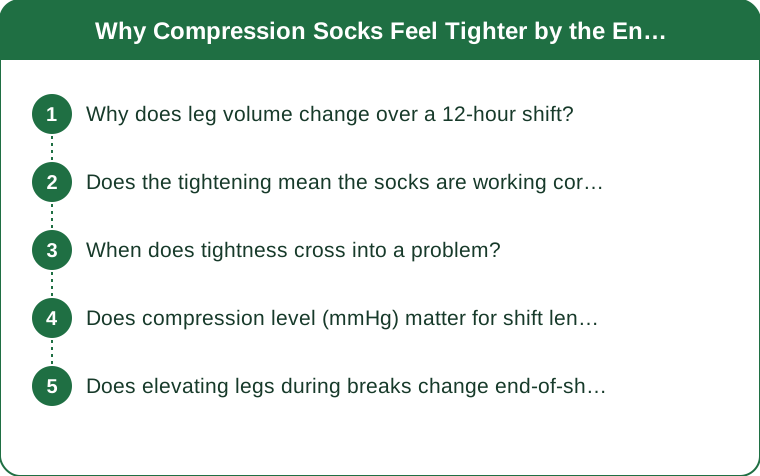
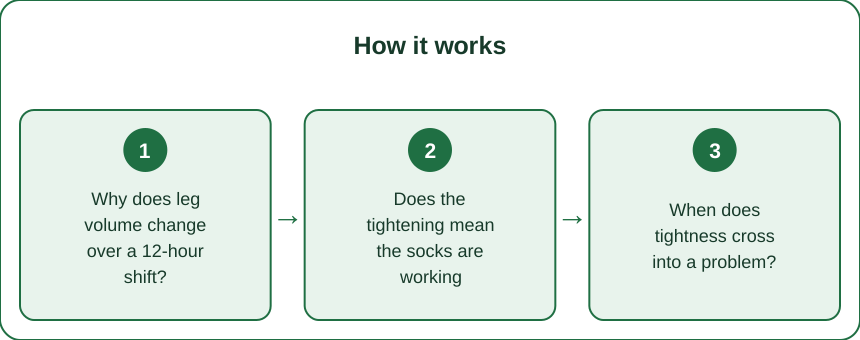
Why does leg volume change over a 12-hour shift?
Standing for extended periods lets gravity pull fluid into the lower legs faster than the body’s normal circulation can move it back up, gradually increasing leg volume over the course of a shift. The sock’s compression level doesn’t change — the leg underneath it does.
Does the tightening mean the socks are working correctly?
Generally yes — graduated compression is designed to resist that fluid pooling, and feeling the sock work harder as fluid accumulates is the expected mechanism, not a malfunction. A sock that felt identical at hour one and hour ten likely isn’t providing meaningful graduated compression at all.

When does tightness cross into a problem?
Numbness, sharp pain, or visible indentation marks that don’t fade within a few minutes of removal are signs the compression level may be too high for your circulation needs, which is different from the normal snugness of end-of-shift fluid accumulation.
Does compression level (mmHg) matter for shift length?
Yes — many nurses on 12-hour shifts find a moderate 15-20 mmHg more comfortable across the full shift than a higher 20-30 mmHg range, which is often more appropriate for medical conditions than for general all-day wear during long standing shifts.
Does elevating legs during breaks change end-of-shift tightness?
Meaningfully — even five to ten minutes of legs elevated above heart level during a break measurably reduces the fluid pooling that builds up over subsequent hours, which is one of the few break-time habits with a direct effect on how the last hours of a shift feel.
TL;DR:
- End-of-shift tightness reflects fluid pooling, not sock malfunction
- Consistent tightness feel throughout a shift may mean too little actual compression
- Numbness or lasting indentation marks are the real warning signs, not general snugness
- Elevating legs during breaks measurably reduces later-shift tightness
This is general information, not medical advice — persistent swelling or pain should be checked by a professional.
Keep Reading
This article is for general informational purposes only and is not medical advice. Always consult a qualified health professional for guidance specific to you.